Septic, Sewer and Water Line Excavation: What the Dig Actually Involves
Excavation for a septic system or a utility line is a sequence, not a single dig, and each step sets up the next.
September 23, 2026 · 4 min read
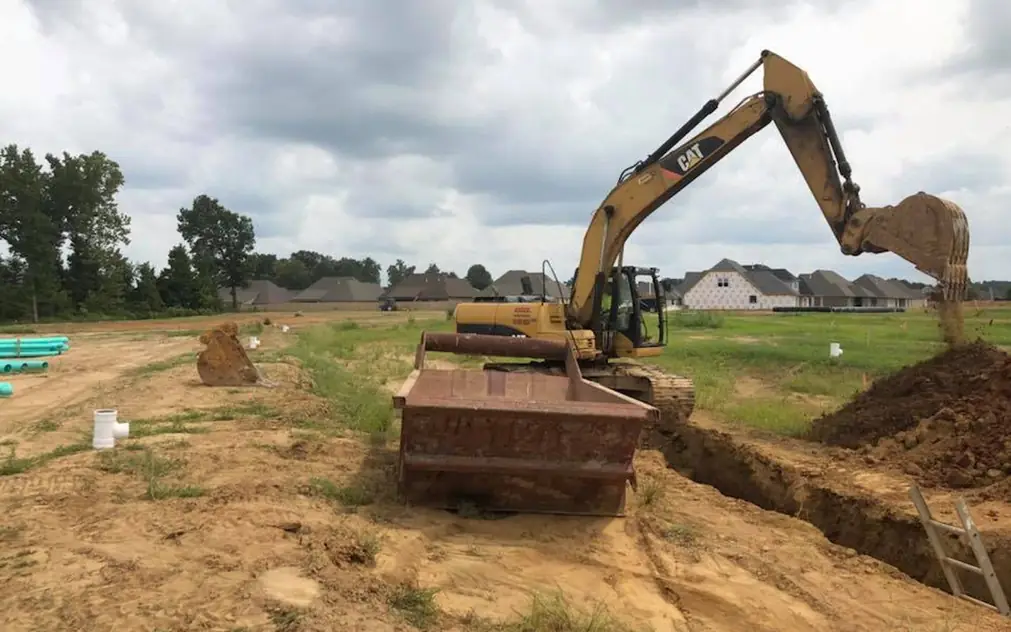
Septic, sewer and water line work all start the same way: with a trench, and with the site work around it done right before the trench ever gets dug. Whether it's a new septic system, a sewer tie-in or a water line run out to a fire hydrant, the sequence matters as much as the digging itself.
Grading Sets Up Everything Else
Before a trench gets dug, the surrounding ground usually needs some amount of grading so equipment can move safely and water drains the way it should once the work is done. Dozers, backhoes and bobcats each handle a different part of that groundwork, from clearing a path for the excavator to shaping the final grade around a septic field or a utility run.
Getting the grade right before the trench opens also protects the work once it's finished. Water that's allowed to pool or run toward a septic field or a fresh trench line can undo a lot of careful digging, so the grading pass at the start of a job is doing more than clearing a path for equipment; it's setting the drainage pattern the whole site will follow afterward.
Trenching for Septic, Sewer and Water Lines
The trench itself is shaped by what's going into it. A septic line and its surrounding field need enough depth and slope for the system to work correctly. A sewer or water line run out to a connection point, or out to a fire hydrant on a larger site, follows its own path and depth depending on what it's tying into. Each of these is dug as its own job, even when a property needs more than one done at the same time.
Depth and slope aren't guesswork once the plan is set, but getting there still takes an operator who can read the ground as the trench opens up. Soil changes across a single property more than people expect, and adjusting the dig to what's actually underground, rather than only what a plan on paper shows, is part of what keeps a trench running true from one end to the other.
Trench Safety Is Part of the Dig, Not an Afterthought
Open trenches, especially deeper ones, need to be treated carefully the entire time they're open. A trench box or similar shoring protects the sides of the trench from caving in while a crew is working in or near it, and it should be standard practice on any trench with real depth to it, not something added only when a trench looks risky. Keeping equipment and spoil piles a safe distance from the trench edge is part of the same discipline.
Backfilling the Right Way
Once a line is in and inspected, backfilling has to be done in a way that supports the pipe without damaging it, packing material in stages rather than dumping it all in at once. Rushed backfill is one of the more common reasons a line settles unevenly later or a trench leaves a visible dip in the yard months after the work is done. Taking the time to backfill correctly the first time avoids that.
The material going back into the trench matters too. What came out of the ground isn't always the best thing to put back around a pipe, and knowing when to bring in a better-draining fill versus reusing native soil is part of what separates a backfill that settles evenly from one that doesn't.
Why One Crew Handling Excavation and Hauling Helps
Excavation work generates its own debris and spoil, from excess dirt to old material coming out of the ground, and that has to go somewhere. Having the same crew handle the digging, grading and hauling means the site work moves as one job instead of waiting on a second company to show up and clear material before work can continue. It also means whoever's on site understands the whole scope of the job, not just their one piece of it.
That continuity matters most when a job hits something unexpected underground, whether that's rock, unusually wet soil, or an old line nobody had a record of. A crew that's handling the whole site, rather than just one segment of it, can adjust the plan on the spot instead of stopping the job to bring in someone else to make that call.
Bosco Contractors Services handles excavation for septic systems, sewer lines, water lines and site work across Jackson, Gibson, Carroll, Madison and Henderson Counties, with dozers, backhoes and bobcats on hand for grading and trenching alike. Visit the Excavation Services page for more, or call 731-697-8333 to talk through your site.
Bosco Contractors Services, 731-697-8333
Call 731-697-8333More articles
Picking the Right Roll-Off Size for Your Next Jackson, TN Project
The right container size comes down to what's coming out of the building, not how big the driveway looks.
Getting Your Driveway or Lot Ready for a Roll-Off Drop
A container that's set down right the first time is easier to load, easier to fill safely and easier to pick back up.